Your baby changes in small ways that are easy to miss while you are living them. A new expression appears at breakfast, a favorite sound becomes part of your morning, and an outfit that once seemed enormous suddenly feels snug. You do not need an expensive baby book or a perfectly arranged monthly photograph to remember those moments. A few words, a favorite picture, and one small object can tell a meaningful story of your family’s first year together.
Baby keepsake ideas on a budget work best when they fit your actual life. If you are managing laundry, appointments, work, or tired evenings, a complicated memory project can become another unfinished task. Begin with something you already have and give yourself permission to keep the record simple. This guide offers practical ways to organize baby memories, choose what to save, and make a collection you can return to without spending more than you can comfortably afford.
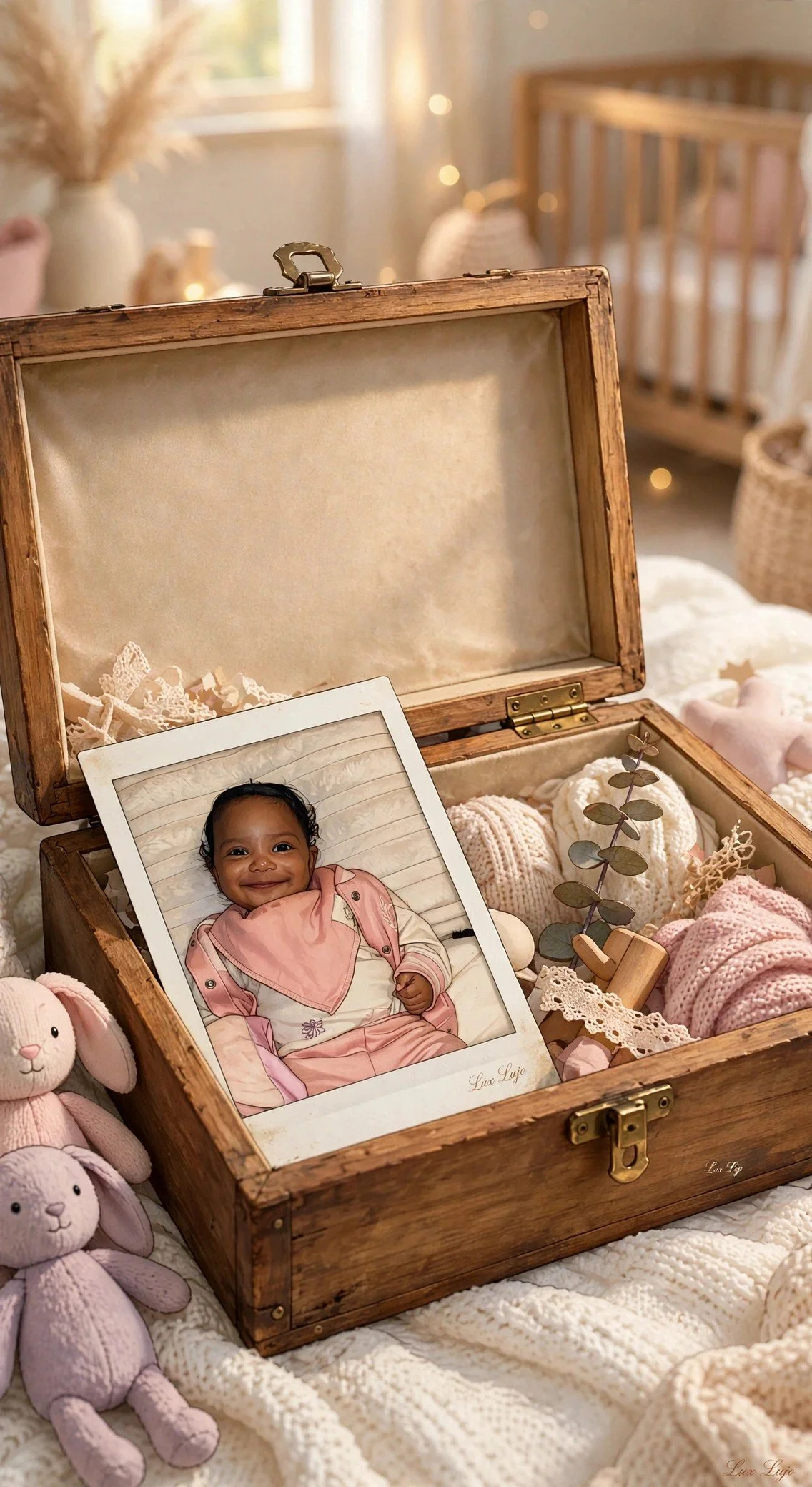
Choose One Easy Place to Begin
A notebook, an empty photo album, or a private digital folder is enough for a beginning. Choose the format you are most likely to use, rather than the one that looks most impressive online. If you enjoy writing by hand, leave a notebook where you can find it. If you usually take photographs on your phone, start with a clearly named album. You can combine paper and digital memories later; there is no need to build the entire system on the first afternoon.
Give the collection a simple name, such as “Our First Year” or “Little Moments.” Keep an envelope or small box beside the notebook for items you have not sorted yet. The purpose of this first step is to make saving a memory easy. When a greeting card arrives or you remember something funny, you will already know where it belongs. A plain folder that you use is more helpful than a beautiful storage system that feels too precious to touch.
Write Down the Ordinary Details
The moments you want to remember may have very little to do with official milestones. Write about the noise your baby makes when a familiar person enters the room, the song you repeat during a difficult evening, or the way a tiny hand holds your finger. A short description gives a photograph context. Years later, you may remember the image but forget why everyone was laughing. One sentence can preserve the part that a camera did not capture.
Try a few gentle prompts: “Today you made me smile when…,” “Something we did together was…,” or “Right now you seem to enjoy….” You can answer one when you have time and skip the rest. This is a family record, not a daily assignment or a development scorecard. Avoid comparing your baby’s timeline with another child’s. A week with no written entry does not erase the care, attention, or memories that happened during it.
Take Photographs You Can Actually Repeat
Simple photographs often fit a keepsake album more easily than elaborate setups. You might take a picture in the same comfortable corner of a room, photograph a favorite outfit laid flat, or capture a close-up of little hands during an ordinary moment. Notice the light already available and keep the background uncomplicated. You can make a meaningful record without buying props, changing your home, or asking a tired baby to cooperate with a lengthy photo session.
Choose a few pictures instead of trying to organize every image immediately. An imperfect photograph may still show an expression, a family connection, or a detail you love. Keep that one. For any setup involving your baby, supervision and a suitable position come before the photograph. If the moment is inconvenient, stop and take a picture another day. Your memory collection should make room for family life rather than require family life to pause for it.
Save a Few Objects With a Clear Meaning
A special outfit, a handwritten card, or a small piece of wrapping paper from a family celebration can become a lovely keepsake. Choose objects because they connect to a story, not because you feel obliged to save everything. Before putting an item away, make sure it is clean and completely dry. Keep the collection away from your baby’s reach, especially if it contains small objects, loose pieces, or anything that could be unsafe to handle.
Add a label explaining what the object is and why it matters. “The outfit you wore when we visited Grandma” says more than a date alone. If an object is bulky, photograph it and save the story instead. You can keep the memory of a favorite blanket without keeping every blanket your child has used. A small selection is easier to store, move, and enjoy than a large box filled with items you no longer recognize.
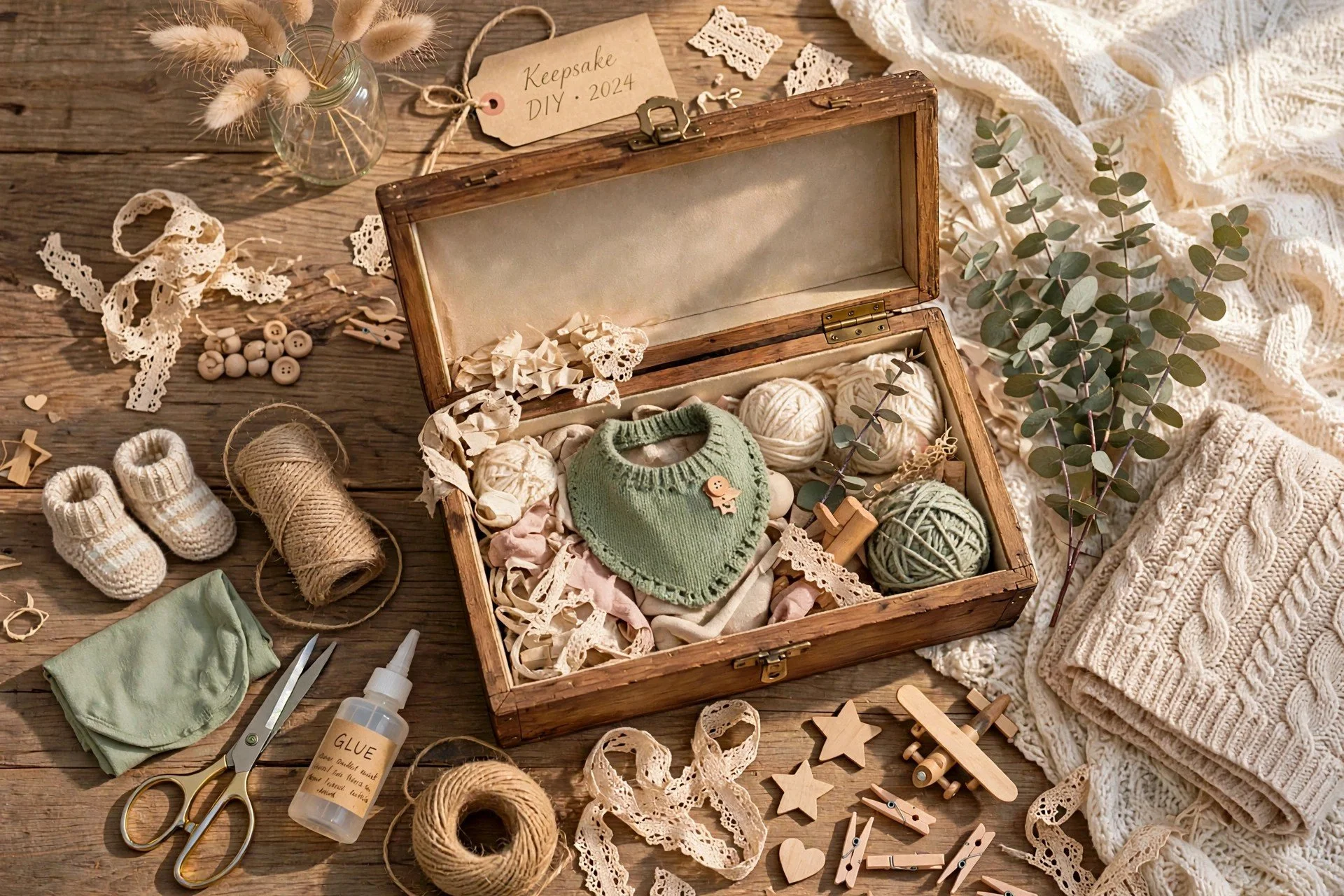
Create a Baby Memory Box From What You Own
Start by looking around your home for a sturdy box, a clean container, or a folder with enough room for the items you chose. You do not need to buy a matching set before beginning. Separate photographs and papers from objects that could crease or mark them. A few plain envelopes can organize cards, printed pictures, and short notes. If you already have materials you enjoy using, a simple label or a small ribbon can make the box feel personal.
Choose a storage spot that is easy to find and protected from dampness or accidental spills. Avoid packing the box so tightly that opening it becomes a chore. Leave a little room for something you may want to add later. If you expect to move, keep the memory box together with belongings you want to locate quickly after unpacking. Knowing where the keepsakes are can be more valuable than finding a perfect decorative container.
Keep Digital Memories Organized and Backed Up
A digital album can hold pictures, short videos, and photographs of handwritten notes. Use names that will make sense later, such as a month and a short description. You do not have to rename every existing file. Start with the next few memories you save and build a small habit from there. A clearly named folder gives you a place to return when you eventually want to print photographs or put together a book.
Keep another copy in a separate place you control, using an option that fits your needs and budget. Check that important files open before relying on a backup. Avoid assuming that a picture shared in a message or posted on social media is your only necessary copy. Account changes, lost devices, and forgotten passwords can make memories harder to retrieve. A little organization now can make a future album project much less overwhelming.
Decide What Stays Private
You can enjoy sharing motherhood while keeping part of your child’s story within the family. Before posting an image, consider what it reveals beyond the moment itself. Look at the background, visible labels, documents, and location details. Keep medical records, addresses, identifying paperwork, and complete personal details in private storage. If another child or family member appears, consider their preferences before including the photograph in a public post.
A close-up of a keepsake, an outfit laid on a chair, or a few words about a family feeling can communicate something beautiful without showing every detail. Public and private albums can serve different purposes. You are allowed to change your mind about what you share as your child grows. Keeping some memories private does not make them less worthy of celebration; it simply gives your family a quieter place to keep its own story.
Use a Small Budget With a Specific Purpose
Before shopping, decide what you are missing. Perhaps you need a place to write, a few printed photographs, or one container that fits a shelf. Check what you already own first. Then set an amount you can spend comfortably, including any printing or delivery costs. A keepsake project should not compete with essentials. If there is no room in the budget this month, a private digital folder and a few notes can still give you a useful beginning.
If you compare albums or notebooks, consider capacity, page layout, and whether you will enjoy using them. Think about how much space you have before buying a large box. Read the description instead of relying only on a styled product photograph. A smaller item that fits your routine can be a better choice than a discounted bundle you did not need. You can add supplies gradually when the collection actually requires them.
Optional keepsake ideas: ZICOTO baby memory book on Amazon for notes, keepsake boxes on Amazon for small mementos, and baby photo albums on Amazon for printed pictures. Compare sizes and use what you own first. I may earn a commission from these affiliate links at no extra cost to you. As an Amazon Associate I earn from qualifying purchases.
Conclusion: Let the Little Moments Be Enough
A meaningful baby keepsake collection begins with attention, not a large purchase. Choose one place to save things, write the details you want to remember, and keep a small selection of photographs and objects. Organize digital copies, make thoughtful choices about privacy, and let the project grow at a pace that suits your family. You can create something valuable even when time, money, and storage space are limited.
Start today with one picture and one sentence. There will be opportunities to print, decorate, and arrange later, but the story can begin now. The little moments count when they happen between laundry, errands, laughter, and tired evenings. Save what feels special to your family and allow the collection to look like the life you are living. It does not need to be perfect to become something your child may treasure.